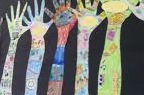
“Everyone says the sky is blue but I know its purple and orange and pink. I’ve met dogs that can talk and seen diamonds wash ashore because I see what’s there, not what I’ve been told too.” –Laura Hill
 When my daughters first asked me to help them write a book I thought, ghads! how do I do that. I was working under deadline to finish an article for a magazine and I didn’t want to stop. But Ava and Kayla kept asking me and when children are persistent you know that it’s important. We brainstormed for three months to write King Arthur and the Werewolves of Camelot, which is the second book in the series but the first one we wrote. Ava, who was five made up the character of Jilly, a fairytale expert who could solve any magical mystery. Kayla was 8 and much more mature, she wrote about Penelope a real world minded girl who solved her problems like puzzles with science and logic.
Now, five books later, Ava and Kayla have become experts at story writing and illustration, researching and fleshing out their own story lines that we all collaborate on. I am left with the task of pulling it all together. It’s been a lot of work but has come with many perks. Ava and Kayla have gotten to meet some of their favorite authors, they have been on a TV talk show, attended big book conventions in NYC and learned the ropes of publishing as well as web design and promotion.
But I think the best thing that’s happened to us is that together we pull this off. We win together, we lose together and we bring our knowledge and inspiration to children in schools all across America. We know that if we can follow our dreams and do this, other children can too! And we are happy our books make other people smile.
 I speak in a lot of schools during the year and often times
my daughters join me. When we
first arrive at a school we are excited and nervous. So are the students,
neither of us knows what to expect.
But we break the ice using our imagination, and sometimes a microphone,
to make fireworks explode and birds fly across the room. Then we begin to talk
about how we write our books.
I speak in a lot of schools during the year and often times
my daughters join me. When we
first arrive at a school we are excited and nervous. So are the students,
neither of us knows what to expect.
But we break the ice using our imagination, and sometimes a microphone,
to make fireworks explode and birds fly across the room. Then we begin to talk
about how we write our books.
The enthusiasm is contagious but sometimes, in
the older grades, the cynicism is palpable too. But as the conversation develops with humor and
self-effacing confessions the atmosphere begins to change. Slowly the children start to see that
we aren’t talking at them about what we have done and we aren’t telling them
what they should do. We are giving
them a formula to get their great ideas out into the world, just like we
did.
You can almost hear a click as their eyes light up when they
make this connection. To see my
daughters present an author visit is too see themselves reflected on
stage. And we tell them, if we can
do this, you can too.
 I’ve talked to thousands of children across the United
States. The number one thing they
want is for you to believe in them.
We give them confidence that their dreams are possible, and courage to
make them come true. And we do one
other thing, we believe that their ideas are great. This is a hard thing to do.
I’ve talked to thousands of children across the United
States. The number one thing they
want is for you to believe in them.
We give them confidence that their dreams are possible, and courage to
make them come true. And we do one
other thing, we believe that their ideas are great. This is a hard thing to do.
If I had not really listened to my daughter’s ideas
conceding the lead when their concepts were better, we would not have this book
series. If they had not trusted me
guiding them through revisions, pitches and press they wouldn’t be the kids
they are today. It takes a lot of
vision, guts and trust to work together.
And that’s the thought I would leave you with. When teachers and parents ask me how I
write with kids I would say set up an environment of trust and mutual respect then
the stories just flow. Sure I use lots
of techniques to coax higher thinking but the basis is you. You are the only
one who can teach them to take a chance on their own great ideas, and the one
who can help them get those ideas into the world.

Laura Hill is an author and producer known for helping children find their voice and talents through creative arts and technology. To find out how you can bring her writing programs to your school email Laura Hill or tweet @candylandcaper.